
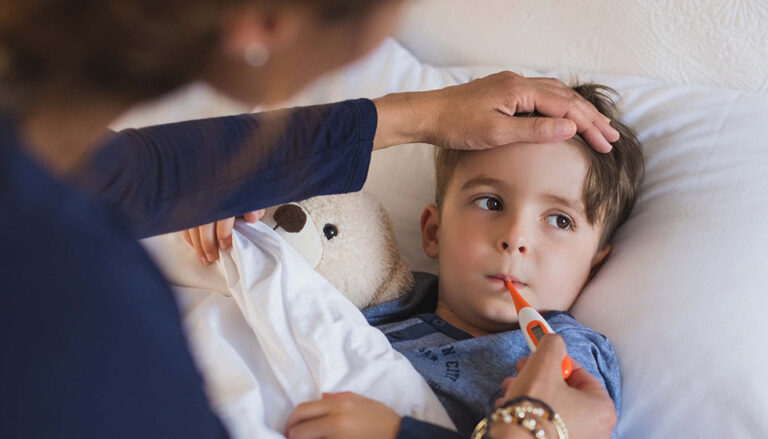
Flu in Children
Influenza, commonly called the flu, is a contagious respiratory illness that can make children feel sick quickly. Fever, chills, cough, body aches and fatigue are common, but symptoms can vary from child to child.
Care for Kids evaluates children with flu symptoms and offers pediatric flu testing and treatment when appropriate.
Common Flu Symptoms in Kids
Influenza symptoms can include:
- Fever or chills
- Cough
- Sore throat
- Runny or stuffy nose
- Headache
- Muscle or body aches
- Fatigue
- Decreased appetite
Some children may also experience vomiting or diarrhea.
How Can I Help Prevent the Flu?
One of the best ways to protect your child from seasonal influenza and its complications is an annual flu vaccine. Flu vaccination is recommended for most children 6 months and older. Always consult your provider to discuss your child’s vaccine schedule and any questions you may have.
Families can also help reduce the spread of influenza by:
- Washing hands frequently
- Covering coughs and sneezes
- Avoiding close contact with people who are sick
- Avoiding sharing drinks and utensils
- Cleaning frequently touched surfaces
- Keeping children home when they’re sick
If one person in your household develops the flu, taking precautions around other family members can help reduce its spread.
Flu Testing for Children
Because flu symptoms can resemble COVID-19, RSV and other respiratory illnesses, testing can sometimes help determine what’s making your child sick.
Care for Kids offers rapid and molecular testing options for influenza when clinically appropriate. Your provider can determine which test is appropriate based on your child’s symptoms and circumstances.
How Is the Flu Treated in Children?
Treatment for influenza depends on your child’s age, symptoms, overall health and how long they have been sick. Many children with mild flu recover with supportive care, including:
- Plenty of rest and fluids
- Age-appropriate medications for fever, aches and discomfort
- Monitoring symptoms as your child recovers
Prescription antiviral medications may also be recommended for some children. Antivirals can make flu symptoms milder and may shorten the length of illness. They work best when started early, ideally within the first two days after symptoms begin.
Your Care for Kids provider can evaluate your child, perform flu testing when appropriate and determine whether an antiviral or other treatment is recommended.
Antibiotics do not treat influenza because the flu is caused by a virus.
When Should My Child See a Doctor for the Flu?
Consider having your child evaluated if you suspect influenza, particularly when symptoms are significant, your child has an underlying medical condition, symptoms are worsening or you have concerns about how your child is recovering.
🚨 Seek emergency care for severe difficulty breathing, blue or gray lips or skin, severe dehydration, seizures, loss of consciousness or other life-threatening symptoms.
Urgent Care or Primary Care for Flu?
Urgent Care: New fever, body aches, cough or other flu-like symptoms that need timely evaluation and possible testing.
Primary Care: Preventive care, flu vaccination when appropriate and available, and ongoing follow-up for children with health conditions that may affect their flu risk.
Flu Care for Kids Near You
When flu symptoms hit, getting answers shouldn’t be difficult. Care for Kids offers convenient pediatric care for flu symptoms, testing and treatment.
👉 Find your nearest clinic and book pediatric urgent or primary care at urgentcarekids.com/locations.


